A breezeway can provide a sheltered connection between separate parts of a residential property while preserving the openness and natural ventilation of an outdoor passage. It may connect a main residence with a detached garage, guest house, pool house, studio, or other secondary structure while becoming an architectural feature in its own right.
Because breezeways are experienced at close range, exterior materials can strongly influence their character. Natural hardwood can introduce warmth and texture alongside stone, concrete, glass, stucco, and structural metal. Ipe is a Brazilian hardwood recognized for its exceptional density, rich natural coloration, and natural resistance to insects and decay.
Connect Separate Structures Architecturally
Buildings on the same property do not necessarily need identical architecture to feel connected. Repeating selected materials, rooflines, colors, or details can establish a visual relationship between the structures.
Homeowners, architects, designers, and builders considering genuine hardwood for this type of application can explore Ipe RainScreen Siding from Brazilian Wood Depot for projects incorporating Ipe into a ventilated exterior wall system.
Create a Hardwood Wall Along One Side
A breezeway can remain open on one side while using a solid architectural wall on the other. This arrangement can provide protection and privacy without eliminating the outdoor character of the passage.
Cladding the solid wall in Ipe can make it a prominent design element. Fresh Ipe generally displays medium brown to deeper chocolate tones with natural variations in grain and coloration between individual boards, creating visual texture along the length of the walkway.
Use the Breezeway to Frame the Landscape
An open-sided breezeway can provide carefully framed views toward gardens, courtyards, pools, or other portions of the property. The contrast between a solid hardwood wall and an open landscaped side can make these views especially noticeable.
Planting beds, ornamental grasses, shrubs, and small trees can soften the edges of the passage while helping integrate the structure into the surrounding landscape.
Create a Strong Arrival Sequence
A breezeway may become part of the everyday route from a garage or parking area to the residence. Rather than treating this circulation path as secondary, thoughtful architecture can make the approach to the home more intentional.
An Ipe-clad wall, coordinated lighting, paving, landscaping, and a clearly defined doorway can turn the passage into a transition between separate architectural spaces.
Pair Ipe With Stone and Concrete
Stone or concrete paving can provide a durable walking surface while creating contrast with the finer grain and warmer coloration of natural hardwood.
Dark structural metal, simple columns, and restrained roof details can further complement Ipe. Limiting the number of materials can help the breezeway maintain a clean contemporary appearance.
Choose Board Orientation Deliberately
Horizontal Ipe can emphasize the length of a breezeway and reinforce the direction of movement between buildings. It can also complement long rooflines, benches, and horizontal openings.
Vertical siding creates a different effect by drawing attention upward. It can work particularly well with tall columns, narrow architectural openings, or higher roof structures.
Board orientation should be coordinated with the supporting furring and complete RainScreen configuration before installation begins.
Plan for Drainage and Ventilation Behind the Hardwood
Although a breezeway roof can protect portions of the siding from direct precipitation, the complete exterior wall assembly still requires careful water-management planning.
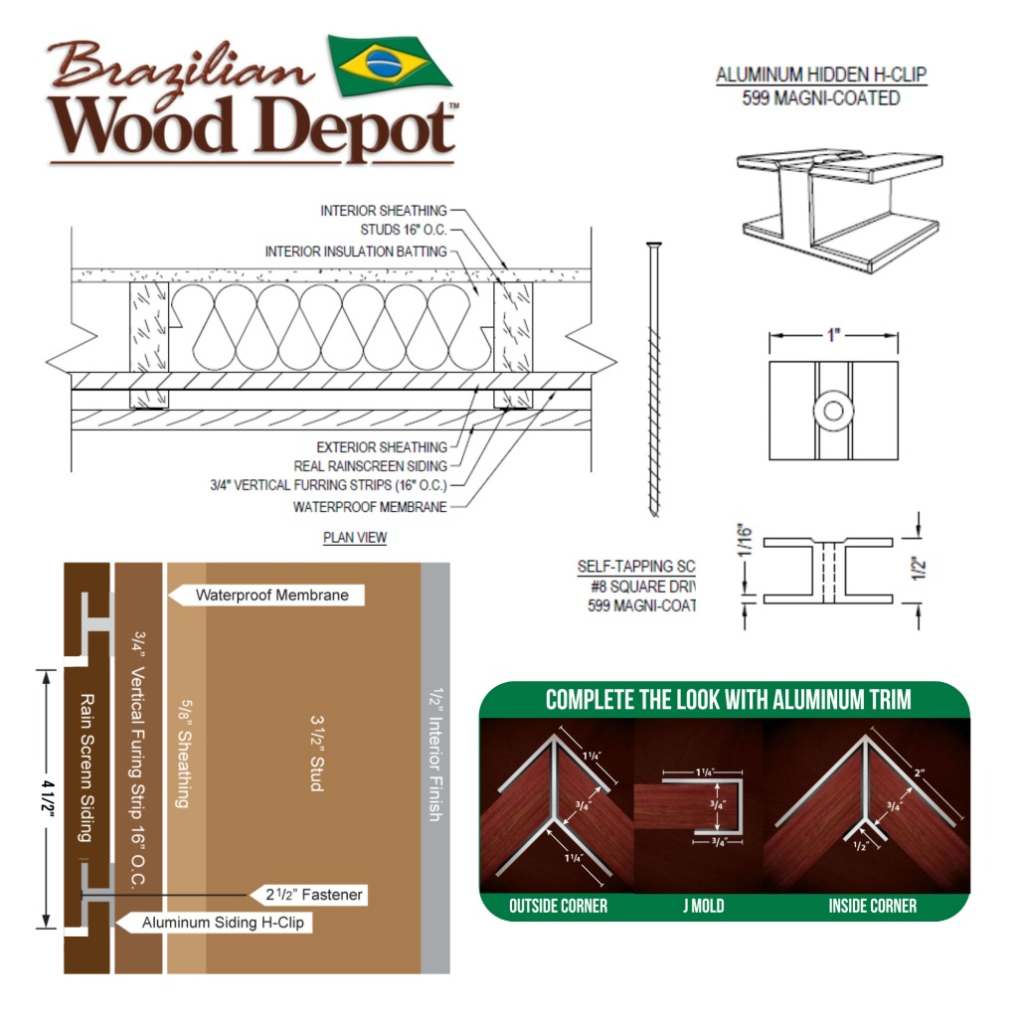
RainScreen construction intentionally creates a cavity between the hardwood siding and the underlying wall. Furring establishes this separation, helping provide a pathway for incidental moisture to drain while allowing airflow behind the cladding.
Flashing, drainage, ventilation, roof intersections, wall bases, doors, openings, and transitions between materials should therefore be coordinated as parts of the complete exterior system.
Maintain Clean Lines With Concealed Fastening
Breezeway walls are often viewed from only a few feet away as residents and visitors move between buildings. Board alignment, spacing, corners, and fastening details can therefore have a noticeable influence on the finished appearance.
Brazilian Wood Depot’s Real RainScreen Siding system is designed around proprietary H-Clip concealed fasteners. Keeping attachment points behind the visible board faces helps maintain cleaner architectural lines and allows the grain, coloration, and board layout of the Ipe to remain prominent.
Integrate Lighting Into the Passage
Breezeways may be used frequently after sunset, making lighting both a practical and architectural consideration. Wall-mounted fixtures can illuminate the walkway while emphasizing the natural texture of the hardwood.
Recessed ceiling lights can provide additional illumination without adding visual clutter to the walls. Outlets, switches, cameras, lighting fixtures, and other components should be coordinated with the siding layout whenever possible.
Consider Protected and Exposed Areas
Different portions of a breezeway can experience very different environmental conditions. Areas deep beneath the roof may remain relatively protected, while open ends and exterior edges can receive more sunlight, wind, and precipitation.
These differences should be considered when planning flashing, drainage, ventilation, fastening, and other project-specific installation details.
Plan for the Natural Weathering of Ipe
Exterior Ipe naturally changes appearance with ultraviolet exposure. When left unoiled, its original brown coloration gradually transitions toward a silver-gray patina.
Because a breezeway contains both sheltered and more exposed areas, different sections of the hardwood may weather at different rates. This natural variation should be considered when determining the desired long-term appearance.
Homeowners who prefer to maintain richer brown tones can periodically clean the siding and apply an appropriate UV-protective hardwood oil.
Turn a Connection Between Buildings Into an Architectural Feature
A thoughtfully designed breezeway can accomplish much more than providing covered circulation. It can connect separate buildings visually, frame landscape views, create a stronger arrival experience, and introduce another outdoor space into the architecture of the property.
By coordinating Ipe siding with RainScreen ventilation, drainage, board orientation, concealed fastening, lighting, paving, landscaping, and neighboring structures, homeowners can create a contemporary breezeway with the warmth and natural character of genuine Brazilian hardwood.
Contact Brazilian Wood Depot
Brazilian Wood Depot
6770 Buford Highway NE
Atlanta, GA 30340
Phone: 770-242-0045
Email: [email protected]
Hours: Monday-Friday, 7:00 a.m.-3:00 p.m. EST
Brazilian Wood Depot supplies Brazilian hardwood siding, decking, fencing, tongue-and-groove products, deck tiles, fasteners, and related accessories, with nationwide jobsite delivery available from its Atlanta location.